

(here is the database in the computer-friendly format of HTML files per each article)
|
V pytanjah možno koristiti dva specialne znaky znajeme iz nakaza LIKE v jezyku SQL: znak procent %, ktory jest rovny mnogo ili nijednomu libo-kakym znakam, i znak podčrknutja _, ktory jest rovny točno jednomu libo-kakomu znaku. Do podrobnosti čitajte tutoj tekst. Two wildcard characters known from the SQL command LIKE can be used in the search: the percent sign % matches zero or more unknown characters, and underscore _ just one unknown character. For more info see this text. |
(spisok vsih avtorov jest na koncu tutoj stranice)
PDF format |
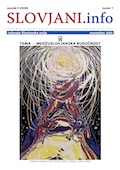
Telmessos of, J. Skepticizm koronavirusa, fanatizm i morbidna religijozita (in English: Coronavirus scepticism, fanaticism and morbid religiosity) in: Slovjani.info, 2020, 5(1), pages 1-2. ISSN 2570-7108 (print), ISSN 2570-7116 (on-line). Available from [https://slovjani.info]. rezjume: Prěvod do medžuslovjanskogo jezyka od Vojtěcha Merunky iz anglijsky pisanogo članka iz 29.9.2020 profesora i arhiepiskopa Ekumeničskogo patrijarhata Joba Telmiskogo, ktory jest direktorom postojanoj misije Ekumeničskogo patrijarhata pri Světovom sovětu crkv v švejcarskoj Ženevě i dekanom Instituta za vyšejše učenje pravoslavnoj theologije v Chambésy v Švejcariji. ključne slova: pravoslavna věra; religijozita; COVID-19; fanatizm summary: English original from September 30, 2020, written by prof. Job of Telmessos who is an Archbishop of the Ecumenical Patriarchate in Constantinople and the Permanent Representative of the Ecumenical Patriarchate to the World Council of Churches and the Dean of the Institute for Orthodox Theology Higher Studies at Chambésy, Switzerland. keywords: orthodoxy; religiosity; COVID-19; fanatism Telmessos of, J. Coronavirus scepticism, fanaticism and morbid religiosity in: Slovjani.info, 2020, 5(1), pages 3-4. ISSN 2570-7108 (print), ISSN 2570-7116 (on-line). Available from [https://slovjani.info]. rezjume: English original from September 30, 2020, written by prof. Job of Telmessos who is an Archbishop of the Ecumenical Patriarchate in Constantinople and the Permanent Representative of the Ecumenical Patriarchate to the World Council of Churches and the Dean of the Institute for Orthodox Theology Higher Studies at Chambésy, Switzerland. ključne slova: orthodoxy; religiosity; COVID-19; fanatism Kuznetsov, N. V. До пытанья о правописах меджусловянского єзыка (in English: On the question of the Interslavic language orthography) in: Slovjani.info, 2020, 5(1), pages 5-13. ISSN 2570-7108 (print), ISSN 2570-7116 (on-line). Available from [https://slovjani.info]. rezjume: Тутој чланък є писаны с цѣлєм проговоренья въпроса о кириличном правописѣ меджусловянского єзыка послѣ прѣмѣн 2020. года Чланък є писаны для ста-новєнья дискусиє и означенья позицији автора чланка в официјној записи. ključne slova: меджусловянскы єзык; кирилица; правопис; вуковица summary: This article describes various interslavic orthographies and alphabets. Its goal is to start a new discussion on this topic. keywords: Interslavic language; Cyrillic; Latin; orthography; Vuk's alphabet Benešovský, V. Kto i kako uči se dnes češsky jezyk (in English: Who and how is learning the Czech language today) in: Slovjani.info, 2020, 5(1), pages 15-17. ISSN 2570-7108 (print), ISSN 2570-7116 (on-line). Available from [https://slovjani.info]. rezjume: Opyt učitelja češskogo jezyka iz Pragy. ključne slova: učenje češskogo jezyka; motivacija do učenja se slovjanskyh jezykov od inzemcev summary: The experience of a teacher the Czech language in Prague keywords: learning the Czech language; motivation to the learning Slavic languages Gasparyan, R. Fedor Kuricyn, djak - Pověst o Drakulě-vojevodě (in English: Legend of the ruler Dracula by Fedor Kuricyn, the deacon) in: Slovjani.info, 2020, 5(1), pages 19-24. ISSN 2570-7108 (print), ISSN 2570-7116 (on-line). Available from [https://slovjani.info]. rezjume: Medžuslovjansko prěloženje od Rafaila Gasparyana iz Modernoj humanitarnoj Akademiji v Moskvě ključne slova: Drakula; Fedor Kuricyn summary: Interslavic translation by Rafail Gasparyan from the Modern Academy for Humanities in Moscow keywords: Dracula; Fedor Kuricyn Saprykin, A. V. Medžuslovjanský sleng i procesy jego pojavjenja (in English: Interslavic slang and the processes of its appearance) in: Slovjani.info, 2020, 5(1), pages 25-34. ISSN 2570-7108 (print), ISSN 2570-7116 (on-line). Available from [https://slovjani.info]. rezjume: Tutój članok jest analizojų povodov pojavjenja slengov v językah světa, spisom dnešnjíh slengov medžuslovjanskógo języka v Diskord kanalu, a takože spisom priměrov koristanja slengov, něktoré priměry koristanja sųt napisanými za članok, a něktoré sųt stenografijejų ustnógo govora. ključne slova: medžuslovjanský sleng; sleng Diskord kanala; sleng Telegram kanala; sleng občiny medžuslovjanskógo języka; razgovorný język; razgovorný medžuslovjanský język; ustný medžuslovjanský język; ustný govor medžuslovjanskógo języka summary: This article is an analysis of the reasons for the appearance of slang in the lan-guages of the world, a list of modern slangs of the Interslavic language of the Discord channel, as well as a list of examples of the use of slang, some invented for the article, some of the examples used are taken from oral speech. keywords: Interslavic slang; slang Discord channel; slang Telegram channel; slang of the Interslavic language community; colloquial Interslavic language; oral Interslavic language; oral speech of the Interslavic language Perdih, A. Lingvistične udaljenosti na bazě izčisljenja ravnyh zvukov v čiselnikah od 1 do 10 v različnyh grupah jezykov (in English: Linguistic distances based on the counting of identical sounds in numerals from 1 to 10 in different groups of languages) in: Slovjani.info, 2020, 5(1), pages 35-43. ISSN 2570-7108 (print), ISSN 2570-7116 (on-line). Available from [https://slovjani.info]. rezjume: Osnova do izčisljenja lingvističnoj udaljenosti medžu jezykami jest v tutom članku definovana kako relativna frekvencija ravnyh zvukov v parah sosědnyh osnovnyh čiselnikov od 1 do 10. Byli raziskyvane jezyky iz 11 grup jezykov. Po tutom kriteriju slovjanske jezyky tvoret grupu (klastr) odděljeny od vsih drugyh testovanyh jezykov. Iz drugyh jezykov najbližeje slovjanskym byli avestansky jezyk i sanskrt. Germanske jezyky tvoret drugy klastr, ale jest od grupy daleko od sebe razdaljenyh jezykov. Tuto jest indikacija, že originalny praindoevropejsky jezyk byl blizky slovjanskomu i jegovi govorci byli originalnymi evropejcami s glavnoju haplogrupoju I hromozoma Y i haplogrupoju U mitohondrijalnoj DNA. V kontaktě s novymi prišedšami iz drugyh jezykovyh grup ili novi prijali protoslovjansky jezyk ili govorci protoslovjanskogo iztra-tili svoj jezyk. Takože mogla byti situacija "něčto medžu", kogda nova populacija načela novy neslovjansky indoevropejsky jezyk. Členok poddrživaje nostratičnu teoriju. ključne slova: frekvencija javjenja ravnyh glasov; klastry jezykov; lingvistične udaljenosti; grupy jezykov; nostratična teorija summary: The relative frequency of equal sounds in pairs of adjacent numerals from 1 to 10 in languages of eleven language groups is a basis for calculation of linguistic distances. By this criterion, the Slavic languages form a cluster separated from all other tested languages. Of other languages, Avestan and Sanskrit are the closest to them. The Germanic languages form another cluster but this cluster is within the space of other tested languages, which are widely dispersed. This is an additional indication that the aboriginal Proto-Indo-European was Proto-Slavic and their speakers were the aboriginal Europeans: mainly the Y Chromosome haplogroup I, mtDNA haplogroup U people. In contact with newcomers of other language groups either the newcomers turned to Proto-Slavic, or the previously Proto-Slavic speakers lost their Proto-Slavic at all, or they turned the non-Indo-European newcomers into Indo-European. A novel time line for Nostratic studies is proposed. keywords: sound frequency; language clusters; language distance; language groups; nostratic theory Linhart, J. Независимая некоммерческая организация "Венедско" Проект "Та Мери" (in English: Independent non-commercial organization "Venedsko", project "Ta Meri") in: Slovjani.info, 2020, 5(1), pages 45-47. ISSN 2570-7108 (print), ISSN 2570-7116 (on-line). Available from [https://slovjani.info]. rezjume: Informacija o novom projektu možnogo koristanja medžuslovjanskogo jezyka. ključne slova: Venedsko; Ta Meri; virtualna realita; kyberprostor summary: Information about the new project of possible use of the Interslavic language. keywords: Venedsko; Ta Meri; virtual reality; cyberspace Linhart, J. Svobodný a samostatný zapsaný spolek Venédsko - Projekt "Ta Meri" (in English: Independent non-commercial organization "Venedsko", project "Ta Meri") in: Slovjani.info, 2020, 5(1), pages 49-50. ISSN 2570-7108 (print), ISSN 2570-7116 (on-line). Available from [https://slovjani.info]. rezjume: Informacija o novom projektu možnogo koristanja medžuslovjanskogo jezyka. ključne slova: Venedsko; Ta Meri; virtualna realita; kyberprostor summary: Information about the new project of possible use of the Interslavic language. keywords: Venedsko; Ta Meri; virtual reality; cyberspace Kiseljov, V. Vladimír Kiseljov - avtor grafiky iz pokryvnoj stranice (in English: Vladimir Kiseljov - author of the graphics on the cover) in: Slovjani.info, 2020, 5(1), page 51. ISSN 2570-7108 (print), ISSN 2570-7116 (on-line). Available from [https://slovjani.info]. rezjume: Vladimír Kiseljov jest češsky artist v oblasti živopisa i nastěnnogo živopisa, performancije, scenograf, režiser. Sotvoril i dal ime novomu artističnomu stilu sinestetizm, v ktorom tvori. Žive i rabotaje v Pragě. ključne slova: sinestetizm; živopis; nastěnny živopis; hudožstvena perfomancija; dizajn; scenografija; film summary: Vladimír Kiseljov is a Czech interdisciplinary artist in the fields of painting and mural painting, art performance, design, scenography and film. He created and named his own complex artistic direction called synesthetics. He lives and works in Prague. keywords: synestetism; painting; mural painting; art performance; design; scenography; film |

PDF format |
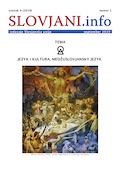
Merunka, V. Slovo redaktora (in English: Editor's foreword) in: Slovjani.info, 2019, 4(2), pages 1-4. ISSN 2570-7108 (print), ISSN 2570-7116 (on-line). Available from [https://slovjani.info]. rezjume: Tutoj tekst piše o prazdniku 30 lět od razvaljenja komunizma, novom šablonu časopisa, različnyh novostij, i takože o pytanjah i problemah našego medžuslovjanskogo pravo- pisanja. ključne slova: 30 lět od razvaljenja komunizma; novy šablon časopisa SLOVJANI.info; novosti; medžuslovjansko pravopisanje summary: This text refers to the 30th anniversary of the fall of communism; also about the new template of our journal; as well as questions and issues related to our Interslavic orthography (spelling). keywords: 30th anniversary of the fall of communism; SLOVJANI.info new journal template; news; Interslavic orthography (spelling) Šabalin, D. Aplikacija "Medžuslovjansky slovnik" (in English: The application "Interslavic Dictionary") in: Slovjani.info, 2019, 4(2), pages 5-8. ISSN 2570-7108 (print), ISSN 2570-7116 (on-line). Available from [https://slovjani.info]. rezjume: Aplikacija "Medžuslovjansky slovnik" je sozdana v oktobru 2019 roka medžunarodnoju družinoju dobrovoljnyh programistov i prěvoditeljev. Slovnik pozvaljaje dělati prěvody medžuslovjanskyh slov na večinstvo slovjanskyh jezykov i obratno, a takože avtomatično generuje gramatične formy dlja vsakogo slova. Programa je adaptovana dlja koriščenja kako na kompjuterah, tako i na mobilnyh telefonah, imaje vysoku bystrost i funkcionuje daže bez svezi s internetom. Rabota nad projektom se prodolžaje. ključne slova: medžuslovjansky jezyk; slovnik; slovosbor; gramatika; časovanje; sklonjenje; izrabotyvanje softvera; medžunarodna surabota summary: The application "Interslavic Dictionary" was created in October 2019 by an international team of volunteer programmers and translators. The dictionary translates words between Interslavic and most of Slavic languages, and also automatically generates grammatical forms of the selected word. The application is adapted for use on computers and mobile phones, has high speed and works even when the Internet connection is lost. Work on the project continues. keywords: interslavic language; dictionary; vocabulary; grammar; conjugation; declension; software development; international cooperation Lazarev, A. Socioligvistične aspekty slovjanskogo jezykoznanja (in English: Sociolinguistic aspects of Slavic linguistics) in: Slovjani.info, 2019, 4(2), pages 9-20. ISSN 2570-7108 (print), ISSN 2570-7116 (on-line). Available from [https://slovjani.info]. rezjume: Diskusija o sodrženju termina staro(crkveno)slovjanksy jezyk i o jegovom městu v ob- čej sisteme jezykov ide uže ne jedno stolětje, ale ju ne možno obvažati zakončenoju. V 20-om stolětju razvitje humanitarnogo diskurza bylo v mnogom oprěděljeno světsko- ateističnym paradigmatom, ktoro imělo jasny vplyv na formovanje lingvističnoj občej tradicije i v podrobnosti takože funkcionalnoj lingvističnoj tipologije. Tutoj tekst obra- čaje vnimanje na tutoj jestvujuči problem dnešnoj slovjanskoj lingvistiky. ključne slova: staro(crkovno)slovjansky jezyk; liturgične jezyky; slovjanska lingvistika; sociolingvistična tipologija; sociolingvističny relativizm summary: The discussion about the content of the concept Old (Church) Slavonic and its place in the general system of languages has been going on for more than one century and can hardly be considered complete. In the 20th century, the development of humanitarian discourse was largely determined by the secular-scientific atheistic paradigm, which had a palpable influence on the formation of the linguistic tradition in general and functional linguistic typology in particular. The focus of this article is on the sociolin- guistic aspects of this essential problem of Slavic linguistics. keywords: Old (Church) Slavonic; liturgical languages; Slavic linguistics sociolinguistic typology; sociolinguistic relativism Bondarenko, N. Cěnnost moskovskyh i peterburskyh salonov iz prvoj tretjiny XIX-ogo stolětja do razvitja medžukulturnyh vezov (in English: The value of Moscow and St. Petersburg salons of the first third of the XIX century in the development of intercultural contacts) in: Slovjani.info, 2019, 4(2), pages 21-26. ISSN 2570-7108 (print), ISSN 2570-7116 (on-line). Available from [https://slovjani.info]. summary: Russian salons in the first third of the 19th century presented a once-off experience in historical and cultural life of Russia. Conversations and discussions on central matters of policy, economics and culture – all this was at issue of the Russian society's culturation. keywords: salons; Russian elite of the first third of the 19th century; intercultural relations Bondarenko, N. Russija i Čehija - strěčenja literatur i kultur v Institutu slovjanověděnja Russkoj akademije nauk (in English: Russia and Czechia - meetings of literature and cultures at the Institute of Slavic Studies of the Russian Academy of Sciences) in: Slovjani.info, 2019, 4(2), pages 26-27. ISSN 2570-7108 (print), ISSN 2570-7116 (on-line). Available from [https://slovjani.info]. rezjume: Kratky report o konferenciji 12-ogo i 13-ogo novembra 2019 v Moskvě. ključne slova: konferencija; literatura; kultura; Russija; Čehija summary: A short report from the conference 12th and 13th november 2019 in Moscow. keywords: conference; literature; cultura; Russia; Czechia Lisjak, A. Kto sųt Slovjani v češskyh lětopisah srědnogo věka? (in English: Who are the Slavs in Czech medieval chronicles?) in: Slovjani.info, 2019, 4(2), pages 28-36. ISSN 2570-7108 (print), ISSN 2570-7116 (on-line). Available from [https://slovjani.info]. rezjume: Tutoj članòk zanimaje sę izslědovańjem (vse)slovjanskoj identičnosti među Čehami v vrěmenah srědnjego věka. Članòk odgovarjaje na pytańje o tom, kako sut na slovjansky identitet ględali pisatelji lětopisov v Čehiji v srědnjem věku. V članku ne vhođų gluboko v analizų vsih lětopisov, no usrědotòčujų sę na poslědnjem iz njih, na tako nazyvajemom Lětopisu Pulkavy, ktory davaje najcělějši obraz slovjanskogo identiteta v češskom srědnjem věku. ključne slova: slovjansky identitet; Čehi; Lětopis Přibika Pulkavy; Slovjani; srědny věk summary: The article deals with the existence of (common) Slavic identity among the Czechs during the Middle Ages. The article answers the question of how the writers of chronicles in the Czech lands in the Middle Ages viewed Slavic identity and themselves. In this article, I do not go into a deep analysis of all the chronicles, but focus on the last among them, the so-called Chronicle of Pulkava, which gives the most complete picture of Slavic identity in the Czech Middle Ages. keywords: Slavic identity; Czechs; Chronicle of Pulkava; Slavs; Middle Ages Gasparyan, R. Alfabetne vojny Slovjanov (vtora čest teksta) (in English: Alphabetic Wars of Slavs (second part)) in: Slovjani.info, 2019, 4(2), pages 37-51. ISSN 2570-7108 (print), ISSN 2570-7116 (on-line). Available from [https://slovjani.info]. rezjume: Členok v kratkosti razkryvaje vse sučne slovjanske pismenosti iz točky zrěnja alfabetnyh vojn, ktore hotěli do vseslovjanskogo koriščenja utvrditi toliko jednu pismenost nad vse druge. Jest pokazano, že razděljenje slovjanskogo světa na zapad i vazhod počelo netoliko tute vojny, ale i volju jih poraziti, kogda puti rěšenja byli takože različne od svojego města. Vo vtoroj česti kratko razkryvajemo kyrillicu i latinicu i eksperimenty s latiniceju. ključne slova: alfabetne vojny; glagoljica; kyrillica; latinica; alfabetne eksperimenty summary: This article is an attempt to review briefly all existing Slavic alphabets from the point of view of alphabetical wars, which are attempts to establish only one alphabet for widespread use, excluding or suppressing all others. It is shown that the separation of the Slavic world into the East and the West, however, gave start not only to the alphabetical wars, but also to attempts to overcome them, and the approach differed depending on in which part of the Slavic world these attempts were made. In second part there are brief reviews of Cyrillic and Latin scripts and review of the experiments with Latin script. keywords: alphabetic wars; Glagolitic; Cyrillic; Latin; alphabetic experiments Gasparyan, R. Alfabetne vojny Slovjanov (tretja čest teksta) (in English: Alphabetic Wars of Slavs (third part)) in: Slovjani.info, 2019, 4(2), pages 52-59. ISSN 2570-7108 (print), ISSN 2570-7116 (on-line). Available from [https://slovjani.info]. rezjume: Členok v kratkosti razkryvaje vse sučne slovjanske pismenosti iz točky zrěnja alfabetnyh vojn, ktore hotěli do vseslovjanskogo koriščenja utvrditi toliko jednu pismenost nad vse druge. Jest pokazano, že razděljenje slovjanskogo světa na zapad i vazhod počelo netoliko tute vojny, ale i volju jih poraziti, kogda puti rěšenja byli takože različne od svojego města. V tretjej česti kratko razkryvajemo bosančicu i arebicu i prědbežne rezultaty alfabetnyh vojn. ključne slova: alfabetne vojny; glagoljica; kyrillica; latinica; alfabetne eksperimenty summary: This article is an attempt to review briefly all existing Slavic alphabets from the point of view of alphabetical wars, which are attempts to establish only one alphabet for widespread use, excluding or suppressing all others. It is shown that the separation of the Slavic world into the East and the West, however, gave start not only to the alphabetical wars, but also to attempts to overcome them, and the approach differed depending on in which part of the Slavic world these attempts were made. In third part there are brief reviews of Bosančica and Arebica scripts and review of the preliminary results of alphabetic wars. keywords: alphabetic wars; Glagolitic; Cyrillic; Latin; alphabetic experiments Azbukina, E. Vplyv pedagoga na razvitje dnešnogo dětka - mit ili realnost? (in English: The influence of the teacher on the development of the modern child: myth or reality?) in: Slovjani.info, 2019, 4(2), pages 60-61. ISSN 2570-7108 (print), ISSN 2570-7116 (on-line). Available from [https://slovjani.info]. rezjume: Text članka govori o paměti na rabotu odličnogo russkogo naučnika L. S. Vygotskogo, sotvorca modernoj dětskoj psihologiji i dětskogo obrazovanja. ključne slova: psihologija; obrazovanje; L. S. Vygotskij summary: The article recalls the work of the outstanding Russian scientist L. S. Vygotsky, co-creator of modern children's psychology and children's education. keywords: psychology; education; L. S. Vygotsky Kolesina, E. Črězkulturna gramotnost učitelja v dnešoj oblasti obrazovanja (in English: Cross-cultural literacy for teachers in additional professional education) in: Slovjani.info, 2019, 4(2), pages 62-67. ISSN 2570-7108 (print), ISSN 2570-7116 (on-line). Available from [https://slovjani.info]. rezjume: Razslědovanje članka davaje několiko definicij od koncepta "črězkulturno" i jihne pozicije v multikultornom učenji, specifičnosti raboty modernogo učitelja, postanovuje pedagogične uslovja, i obezpečuje formovanje črězkulturnoj gramotnosti i uslovjah doplnjučego profesionalnogo obrazovanja. ključne slova: črězkulturna gramotnost; mnogokulturno obrazovanje; medžukulturny dialog; funkcijonalny model črězkulturnoj gramotnosti učitelja; dopolnjuče profesionalno obrazovanje summary: The research gives some definitions of the concept of "cross-cultural literacy" and its place in multicultural education, specifics of the work of a modern teacher, determines the pedagogical conditions that ensure the formation of cross-cultural literacy in conditions of additional vocational education. keywords: cross-cultural literacy; multicultural education; intercultural dialogue; functional model of cross-cultural literacy of teachers; additional professional education Dokoupil M. Slovjanska Lužica i Lužičani (in English: Slavic Lusatia and Lusatians) in: Slovjani.info, 2019, 4(2), pages 68-72. ISSN 2570-7108 (print), ISSN 2570-7116 (on-line). Available from [https://slovjani.info]. rezjume: Tutoj članok piše o historiji i dnešnom vrěmeni Lužice, krajině od mnogyh prošlyh lět naležečej slovjanskym lužičanam i dnes vkluječoj do svezovyh krajin Němcije. ključne slova: slovjanska Lužica; Lužičani; lužičski srbi; lužicky jezyk; Němcija summary: This article deals with the history and present of the entire Lusatia, a territory belon- ging to the Slavic Lusatian since log time ago and now incorporated into the Union Lands of Germany. keywords: Slavic Lusatia; Lusatians (Wends); Lusatian Serbs; Lusatian; Germany Redakcija Poučenje avtoram (in English: Instructions for authors) in: Slovjani.info, 2019, 4(2), pages 73-74. ISSN 2570-7108 (print), ISSN 2570-7116 (on-line). Available from [https://slovjani.info]. rezjume: Časopis "Slovjani.info" publikuje originalne teksty pisane vsimi slovjanskymi jezykami ili Esperantom, Interlingvoj, anglijskym, němečskym, hišpanskym, francuzskym, ili italijanskym jezykami v formatu DOCX poslě jihnoj anonymnoj recenzije neodvisnymi expertami. Vsekaky tekst trěbuje iměti nazvanje, abstrakt, i 3-7 ključnyh slov pisanyh latinicoju kurzivnym stylom Noto Serif 12pt v anglijskom i medžuslovjanskom jezykah. Trěbujemo 300-600 znakov abstrakta vključajuč prazdnе znaky. ključne slova: proces recenzije; avtori člankov; stil i struktura teksta summary: English summary (e.g. title, abstract, and keywords) must be written at the end of each article in this style Noto serif 14pt italic. This is an article example in English. keywords: review process; authors; text format Radičević, G. Haiku (in English: Haiku) in: Slovjani.info, 2019, 4(2), page 75. ISSN 2570-7108 (print), ISSN 2570-7116 (on-line). Available from [https://slovjani.info]. rezjume: Medžuslovjanska poezija v japonskom stilu Haiku. ključne slova: Haiku summary: Interslavic poetry in the Japan style Haiku. keywords: Haiku |
PDF format |
Lazarev, A. Medžuslovjansky jezyk kako instrument rovnodrženogo razvitja slovjanskogo světa (in English: Interslavic language as an instrument of sustainable development of the Slavic world) in: Slovjani.info, 2019, 4(1), pages 1-7. ISSN 2570-7108 (print), ISSN 2570-7116 (on-line). Available from [https://slovjani.info]. rezjume: Tekst govori o globalnom i zonalnom učinku kvaliteta komunikačnogo orudja. Častečno, diskutuje se rolja umětnogo medžuslovjanskogo jezyka do tvorjenja slovjanskogo lingvističnogo obraza rovno kako kulturne, historične, filosofične i socijalne pogledy tutogo procesa. Tutoj kvalitet rěšaje efektivnost vezov ne toliko medžunarodnyh otnošenj, ale i medžu socijalnymi urovnjami slovjanskogo světa. Specijalno vnimanje jest posvečeno problemu formovanja kreativnoj črědy ovladajučej tutoj instrument komunikacije, ktory jest moguči davati směry razvitja slovjanskogo světa. ključne slova: medžuslovjansky umětny jezyk; rovnodrženy razvoj; slovjansky svět; jezykova mapa světa; socijolingvistika; elitologija; socijalna stratifikacija; kvalitet interakcij; dom bytja; kreativna elita summary: The article discusses the impact of the quality of communication tools on both global and zonal sustainable development. In particular, the role of the constructed interslavic language in creating the Slavic linguistic picture of the world is examined, as well as the cultural, historical, philosophical and social aspects of this process. This quality determines the effectiveness of interaction not only in interethnic relations, but also between social strata in the Slavic world. Special attention is devoted to the formation of a creative class that owns this communication tool and is able to determine the development vectors of the Slavic world. keywords: interslavic constructed language; sustainable development; Slavic world; house of being; sociolinguistics; elitology; social stratification; quality of interaction; creative class Lombino, R. Medžuslovjansky język v žiťju češskogo nevidęćego studenta, pųtovatelja i ljubitelja językov (in English: Interslavic language in the life of a Czech blind student, traveler and lover of languages) in: Slovjani.info, 2019, 4(1), pages 8-12. ISSN 2570-7108 (print), ISSN 2570-7116 (on-line). Available from [https://slovjani.info]. rezjume: Tekst sę odnosi k kontaktu jegovogo avtora s medžuslovjanskym językom. Avtor v njem opisuje rolju medžuslovjanskogo języka v svojem žiťju i podrobno råzkazyvaje o tom, kako jest k medžuslovjanskomu języku prišel, kako jego vidi, kako sòråbotaje na jegovom råzvoju i kako jego koristi v praktikě. Na koncu članka prědlagaje několiko svojih myslij na temu podhoda k medžuslovjanskomu języku kako univerzalnogo srědstva komunikacije medžu členami slovjanskyh narodov. ključne slova: medžuslovjansky język; slovjanske języky; języčna praktika; komunikacija medžu slovjanami; Braille; pųtovańje; Slovjanska Unija summary: The text deals with the contact of its author with the Interslavic language. The author describes the role of Interslavic in his life and describes in detail how he got to Interslavic, how he sees it, how he participates in its development and uses it in practice. At the end of the article, he presents some ideas on Interslavic as a universal communication tool among people of the Slavic nations. keywords: Interslavic language; Slavic languages; language practice; communication tool between Slavs; Braille; travelling; Slavic Union Carpow, G, Gasparyan, R. Požičkóva i zvųkorędna otęžkě vųtrě proběgu búdovanä međuslověnskoga jazyka (in English: Borrowing and phonologic problems within interslavic language construction process) in: Slovjani.info, 2019, 4(1), pages 13-36. ISSN 2570-7108 (print), ISSN 2570-7116 (on-line). Available from [https://slovjani.info]. rezjume: Članek-òv ïmá izučenije kriterijov oblübenostï tvornyh jazykov i otvori něktory iz nih v råbotji. V ovomu članku ïmá něktory dokazy potrěbnostï znïženä ličby ïnozemnyh slověs vųtrě proběgu búdovanä međuslověnskoga jazyka. Tvorca privođat alĝoriŧm dlä ustanovanä zdroja novyh neoloĝizmov zavodimyh v jazyk-òt. Tvorca probat maksimizovati ïndeksy gomonimstva i alofonstva i dostati potrěbnyǐ i dostatočnyǐ dlä jazyka sbor fonem, sojodnošat alofony i fonemy v råzvojennomu jazyku i soråvnat råzličny možnostï sodòržanä jazykóvoji azbuky. ključne slova: zvųčnistvo; međuslověnskyǐ; jazyk; slověny; novoslověnskyǐ; požitek; zvųkoręd; azbuka summary: This article provides an investigation of constructed language popularity criteria and reveals some of them in the paper. In this article, some proofs are provided for foreign words amount reduction necessity within interslavic language construction process. Authors devise an algorithm for determining the source for a new neologism being brought into the language. Authors try to maximize indexes of homonymy and allophony, while identifying a necessary and sufficient amount of phonemes for the language, relating allophones and phonemes of the language being constructed and comparing different possibilities of language alphabet content. keywords: phonology; Interslavic; language; Slavic; Neoslavonic; borrowing; vowel; consonant; alphabet Kotlyar, Y. Faktor jezyka u mentaliteta nasěljenja južnoj Ukrajiny (in English: The language factor in the mentality of the Southern Ukraine population) in: Slovjani.info, 2019, 4(1), pages 37-43. ISSN 2570-7108 (print), ISSN 2570-7116 (on-line). Available from [https://slovjani.info]. rezjume: V tekstu se piše o osnovnyh faktorah formovanja južnoukrajinskogo mentaliteta. Jedin iz najvažnějših faktorov jest faktor jezyka. Narodna mentalnost imaje funkciju historičnoj paměti i davaje narodu jegovy identitet i etničnu svědomost. ukrajinsku državu formovalo sělsko nasěljenje i jegova starodavna zemjeděljska kultura. ključne slova: mentalitet; jezyk; nasěljenje; sěljanstvo; revolucija; južna Ukrajina summary: The article deals with the primary factors of the Southern Ukraine mentality formation. Mentality is a national type of world attitude based on linguistic images and symbols (often subconscious) that determine stereotypes of behavior, psychological reactions, the evaluation of certain events or individuals, and the attitude towards the surrounding reality. One of the most significant factors influencing the mentality formation of the Sou-thern Ukraine population is the linguistic factor. The distinction of languages me-ans, first of all, the difference between worldviews. National mentality fulfills the functions of historical memory and allows the people preserving identity and ethnic self-consciousness. The rural population that kept the ancient agricultural traditions, the outlook of ancestors-rebels and defenders of the Fatherland had chances to rebuild the independent Ukrainian state based on its social ideal (land, freedom, individual economy, and cultural traditions). For that case, the peasantry of the South of Ukraine, which has accumulated in itself the most characteristic features of the ancient Ukrainian (life in the steppe, love for religion, and rejection of any power except its own), is indicative. keywords: mentality; language; population; peasantry; revolution; Southern Ukraine Lozko, H. S. Aktualizacija etničnyh religij u slovjanov v XX – XXI stolětjah (in English: The topicality of Ethnic Religions in the Slavs in the ХХ - ХХІ Century) in: Slovjani.info, 2019, 4(1), pages 44-52. ISSN 2570-7108 (print), ISSN 2570-7116 (on-line). Available from [https://slovjani.info]. rezjume: Tekst piše o dviženji revitalizacije avtochtonyh tradicij v věku globalizacije XX i XXI stolětij kako etnoreligijozna renesancija. Kratko se piše o historiji rodnoj věry Slovjanov, ktora kontrastuje s različnymi sinkretičnymi kultami New Age. Glavna orijentacija jest do ukrajinskoj kultury i historije. ključne slova: tradicijonalizm; etnoreligija; rodna věra; poganstvo; Orden Boga Solnca; Volodymyr Šajan; neoreligije summary: There was a natural movement of revival of native autochthonous traditions among the intellectuals of many European countries in the globalization period of the XX - XXI centuries. Representatives of this movement believe that self-preservation of national identities is possible only through native religious cultures created by natives and not imposed by world missionaries. In the religious philosophy branch, such movements are called "ethno-religious renaissance" or the revival of the native faith, and religions themselves are "ethno-religions", native faith, old faith or heathenism. We provide a brief historical overview of the main directions of revival of the native faith of the Slavs, introduce with its prominent representatives. We disclose the complex worldviews, legal and ethical conflicts that arise among the faithful in the modern world. Globalization is actually absorbing and neutralizing traditions. In contrast to traditionalism, it creates numerous surrogate forms of neo-religions, pseudo-religions, syncretic cults called New Age that distract people from their true native. The main focus of the author is on the Slavic and in particular on the Ukrainian historical and cultural material. keywords: traditionalism; ethnoreligion; native faith; heathenism; The Knightly Order of the Sun God; Volodymyr Shaian; neoreligion Dokoupil M. Slovjanski bogi (in English: Slavic gods) in: Slovjani.info, 2019, 4(1), pages 53-55. ISSN 2570-7108 (print), ISSN 2570-7116 (on-line). Available from [https://slovjani.info]. rezjume: Tutoj članok hoče prinesti lučše znanje o slovjanskyh bogah v kontekstu indoevropejskyh bogov i mitov prědhristijanskoj ery. Piše o vsih poznanyh prirodnyh bogah i vezah medžu njimi. ključne slova: slovjanski bogi; Perun; bogi i mity summary: This article seeks to raise awareness of the Slavic gods in the context of the Indo-European gods and myths of the pre-Christian era. It lists all found natural deities and relationships between them. keywords: Slavic gods; Perun; gods and myths Merunka, V. Medžuslovjanske podtexty do filma Kolovana ptica (in English: Interslavic subtitles for the movie Painted Bird) in: Slovjani.info, 2019, 4(1), pages 56-62. ISSN 2570-7108 (print), ISSN 2570-7116 (on-line). Available from [https://slovjani.info]. rezjume: Tekst članka sut podteksty do filma Kolorovana ptica (direktor i režiser Václav Marhoul, 2019) prěložene do medžuslovjanskogo jezyka. ključne slova: Kolorovana Ptica (film Václava Marhoula, 2019); podteksty filma; medžuslovjansky jezyk summary: This article contains subtitles from the film Painted Bird translated to Interslavic. keywords: Painted Bird (movie by Václav Marhoul, 2019); subtitles; Interslavic Hanák, T., Merunka, V., Ostrouchov, P. Pěsnja Dušo moja do filma Kolorovana ptica (in English: Movie song Oh my soul for the film Painted Bird) in: Slovjani.info, 2019, 4(1), pages 63-64. ISSN 2570-7108 (print), ISSN 2570-7116 (on-line). Available from [https://slovjani.info]. rezjume: Tekst v medžuslovjanskom jezyku i melodija pěsnje "Dušo moja" komponovane do filma Kolorovana Ptica. ključne slova: filmova pěsnja; Kolorovana Ptica; Dušo Moja summary: Lyrics in the interslavic language and the tune of the song "Oh my soul" composed for the film Painted Bird. keywords: movie song; Painted Bird; Oh My Soul Swat, M. erratum – Moderno glagoljičsko pravopisanje, in Slovjani.info, 2018, 3(2), pages 21-38 (in English: erratum – Moderno glagoljičsko pravopisanje, in Slovjani.info, 2018, 3(2), pages 21-38) in: Slovjani.info, 2019, 4(1), page 65. ISSN 2570-7108 (print), ISSN 2570-7116 (on-line). Available from [https://slovjani.info]. Swat, M. Okrugla kursivna Glagoljica (in English: Round Cursive Glagolitic) in: Slovjani.info, 2019, 4(1), pages 66-76. ISSN 2570-7108 (print), ISSN 2570-7116 (on-line). Available from [https://slovjani.info]. rezjume: Avtor prědstavja ulěpšeny sposob bystrogo, ručnogo pisanja okrugloju glagoljiceju, obgovarja problemy svezane s ručnym pisanjem glagoljiceju tutdenj i dava razvezanja, dělaje kratky prěgled glagoljičskyh bukv i jihnyh varijantov v historiji i maly prěgled vzajemnoj razumivosti srěd varijantov, vključajuči v to hrvatsku vuglastu glagoljicu i kursivnu, glagoljicu iz Bašky i okruglu glagoljicu. V koncu prědstavja glagoljičsky zapis na priměr. ključne slova: glagoljica; ručno pisanje; kurziva; brzo pisanje; obla; okrugla; vulgasta; prisposobjenje summary: Author presents an improved way of faster handwriting with round Glagolitic script, discusses problems connected with Glagolitic handwriting today and gives solutions, makes a short review of Glagolitic letters and their variants during the history and also a small review of mutual understandability between variants, including Croatian angular and cursive Glagolitic, Bulgarian Glagolitic from Baška and round Glagolitic. At the end gives an example of a written text. keywords: Glagolitic script; handwriting; cursive; fast writing; round; round-shaped; angular; adaptation |


 ISSN 2570-7108 (print) - ISSN 2570-7116 (on-line)

