

parametry poiskanja: avtor = %, nazvanje = %jezyk%, rezjume = %, kljucno = %, od = 2016, do = 2999
(novo poiskanje jest na na koncu tutoj stranice)
PDF format |
Benešovský, V. Kto i kako uči se dnes češsky jezyk (in English: Who and how is learning the Czech language today) in: Slovjani.info, 2020, 5(1), pages 15-17. ISSN 2570-7108 (print), ISSN 2570-7116 (on-line). Available from [https://slovjani.info]. rezjume: Opyt učitelja češskogo jezyka iz Pragy. ključne slova: učenje češskogo jezyka; motivacija do učenja se slovjanskyh jezykov od inzemcev summary: The experience of a teacher the Czech language in Prague keywords: learning the Czech language; motivation to the learning Slavic languages Perdih, A. Lingvistične udaljenosti na bazě izčisljenja ravnyh zvukov v čiselnikah od 1 do 10 v različnyh grupah jezykov (in English: Linguistic distances based on the counting of identical sounds in numerals from 1 to 10 in different groups of languages) in: Slovjani.info, 2020, 5(1), pages 35-43. ISSN 2570-7108 (print), ISSN 2570-7116 (on-line). Available from [https://slovjani.info]. rezjume: Osnova do izčisljenja lingvističnoj udaljenosti medžu jezykami jest v tutom članku definovana kako relativna frekvencija ravnyh zvukov v parah sosědnyh osnovnyh čiselnikov od 1 do 10. Byli raziskyvane jezyky iz 11 grup jezykov. Po tutom kriteriju slovjanske jezyky tvoret grupu (klastr) odděljeny od vsih drugyh testovanyh jezykov. Iz drugyh jezykov najbližeje slovjanskym byli avestansky jezyk i sanskrt. Germanske jezyky tvoret drugy klastr, ale jest od grupy daleko od sebe razdaljenyh jezykov. Tuto jest indikacija, že originalny praindoevropejsky jezyk byl blizky slovjanskomu i jegovi govorci byli originalnymi evropejcami s glavnoju haplogrupoju I hromozoma Y i haplogrupoju U mitohondrijalnoj DNA. V kontaktě s novymi prišedšami iz drugyh jezykovyh grup ili novi prijali protoslovjansky jezyk ili govorci protoslovjanskogo iztra-tili svoj jezyk. Takože mogla byti situacija "něčto medžu", kogda nova populacija načela novy neslovjansky indoevropejsky jezyk. Členok poddrživaje nostratičnu teoriju. ključne slova: frekvencija javjenja ravnyh glasov; klastry jezykov; lingvistične udaljenosti; grupy jezykov; nostratična teorija summary: The relative frequency of equal sounds in pairs of adjacent numerals from 1 to 10 in languages of eleven language groups is a basis for calculation of linguistic distances. By this criterion, the Slavic languages form a cluster separated from all other tested languages. Of other languages, Avestan and Sanskrit are the closest to them. The Germanic languages form another cluster but this cluster is within the space of other tested languages, which are widely dispersed. This is an additional indication that the aboriginal Proto-Indo-European was Proto-Slavic and their speakers were the aboriginal Europeans: mainly the Y Chromosome haplogroup I, mtDNA haplogroup U people. In contact with newcomers of other language groups either the newcomers turned to Proto-Slavic, or the previously Proto-Slavic speakers lost their Proto-Slavic at all, or they turned the non-Indo-European newcomers into Indo-European. A novel time line for Nostratic studies is proposed. keywords: sound frequency; language clusters; language distance; language groups; nostratic theory |

PDF format |
Lazarev, A. Socioligvistične aspekty slovjanskogo jezykoznanja (in English: Sociolinguistic aspects of Slavic linguistics) in: Slovjani.info, 2019, 4(2), pages 9-20. ISSN 2570-7108 (print), ISSN 2570-7116 (on-line). Available from [https://slovjani.info]. rezjume: Diskusija o sodrženju termina staro(crkveno)slovjanksy jezyk i o jegovom městu v ob- čej sisteme jezykov ide uže ne jedno stolětje, ale ju ne možno obvažati zakončenoju. V 20-om stolětju razvitje humanitarnogo diskurza bylo v mnogom oprěděljeno světsko- ateističnym paradigmatom, ktoro imělo jasny vplyv na formovanje lingvističnoj občej tradicije i v podrobnosti takože funkcionalnoj lingvističnoj tipologije. Tutoj tekst obra- čaje vnimanje na tutoj jestvujuči problem dnešnoj slovjanskoj lingvistiky. ključne slova: staro(crkovno)slovjansky jezyk; liturgične jezyky; slovjanska lingvistika; sociolingvistična tipologija; sociolingvističny relativizm summary: The discussion about the content of the concept Old (Church) Slavonic and its place in the general system of languages has been going on for more than one century and can hardly be considered complete. In the 20th century, the development of humanitarian discourse was largely determined by the secular-scientific atheistic paradigm, which had a palpable influence on the formation of the linguistic tradition in general and functional linguistic typology in particular. The focus of this article is on the sociolin- guistic aspects of this essential problem of Slavic linguistics. keywords: Old (Church) Slavonic; liturgical languages; Slavic linguistics sociolinguistic typology; sociolinguistic relativism |
PDF format |
Lazarev, A. Medžuslovjansky jezyk kako instrument rovnodrženogo razvitja slovjanskogo světa (in English: Interslavic language as an instrument of sustainable development of the Slavic world) in: Slovjani.info, 2019, 4(1), pages 1-7. ISSN 2570-7108 (print), ISSN 2570-7116 (on-line). Available from [https://slovjani.info]. rezjume: Tekst govori o globalnom i zonalnom učinku kvaliteta komunikačnogo orudja. Častečno, diskutuje se rolja umětnogo medžuslovjanskogo jezyka do tvorjenja slovjanskogo lingvističnogo obraza rovno kako kulturne, historične, filosofične i socijalne pogledy tutogo procesa. Tutoj kvalitet rěšaje efektivnost vezov ne toliko medžunarodnyh otnošenj, ale i medžu socijalnymi urovnjami slovjanskogo světa. Specijalno vnimanje jest posvečeno problemu formovanja kreativnoj črědy ovladajučej tutoj instrument komunikacije, ktory jest moguči davati směry razvitja slovjanskogo světa. ključne slova: medžuslovjansky umětny jezyk; rovnodrženy razvoj; slovjansky svět; jezykova mapa světa; socijolingvistika; elitologija; socijalna stratifikacija; kvalitet interakcij; dom bytja; kreativna elita summary: The article discusses the impact of the quality of communication tools on both global and zonal sustainable development. In particular, the role of the constructed interslavic language in creating the Slavic linguistic picture of the world is examined, as well as the cultural, historical, philosophical and social aspects of this process. This quality determines the effectiveness of interaction not only in interethnic relations, but also between social strata in the Slavic world. Special attention is devoted to the formation of a creative class that owns this communication tool and is able to determine the development vectors of the Slavic world. keywords: interslavic constructed language; sustainable development; Slavic world; house of being; sociolinguistics; elitology; social stratification; quality of interaction; creative class Lombino, R. Medžuslovjansky język v žiťju češskogo nevidęćego studenta, pųtovatelja i ljubitelja językov (in English: Interslavic language in the life of a Czech blind student, traveler and lover of languages) in: Slovjani.info, 2019, 4(1), pages 8-12. ISSN 2570-7108 (print), ISSN 2570-7116 (on-line). Available from [https://slovjani.info]. rezjume: Tekst sę odnosi k kontaktu jegovogo avtora s medžuslovjanskym językom. Avtor v njem opisuje rolju medžuslovjanskogo języka v svojem žiťju i podrobno råzkazyvaje o tom, kako jest k medžuslovjanskomu języku prišel, kako jego vidi, kako sòråbotaje na jegovom råzvoju i kako jego koristi v praktikě. Na koncu članka prědlagaje několiko svojih myslij na temu podhoda k medžuslovjanskomu języku kako univerzalnogo srědstva komunikacije medžu členami slovjanskyh narodov. ključne slova: medžuslovjansky język; slovjanske języky; języčna praktika; komunikacija medžu slovjanami; Braille; pųtovańje; Slovjanska Unija summary: The text deals with the contact of its author with the Interslavic language. The author describes the role of Interslavic in his life and describes in detail how he got to Interslavic, how he sees it, how he participates in its development and uses it in practice. At the end of the article, he presents some ideas on Interslavic as a universal communication tool among people of the Slavic nations. keywords: Interslavic language; Slavic languages; language practice; communication tool between Slavs; Braille; travelling; Slavic Union Kotlyar, Y. Faktor jezyka u mentaliteta nasěljenja južnoj Ukrajiny (in English: The language factor in the mentality of the Southern Ukraine population) in: Slovjani.info, 2019, 4(1), pages 37-43. ISSN 2570-7108 (print), ISSN 2570-7116 (on-line). Available from [https://slovjani.info]. rezjume: V tekstu se piše o osnovnyh faktorah formovanja južnoukrajinskogo mentaliteta. Jedin iz najvažnějših faktorov jest faktor jezyka. Narodna mentalnost imaje funkciju historičnoj paměti i davaje narodu jegovy identitet i etničnu svědomost. ukrajinsku državu formovalo sělsko nasěljenje i jegova starodavna zemjeděljska kultura. ključne slova: mentalitet; jezyk; nasěljenje; sěljanstvo; revolucija; južna Ukrajina summary: The article deals with the primary factors of the Southern Ukraine mentality formation. Mentality is a national type of world attitude based on linguistic images and symbols (often subconscious) that determine stereotypes of behavior, psychological reactions, the evaluation of certain events or individuals, and the attitude towards the surrounding reality. One of the most significant factors influencing the mentality formation of the Sou-thern Ukraine population is the linguistic factor. The distinction of languages me-ans, first of all, the difference between worldviews. National mentality fulfills the functions of historical memory and allows the people preserving identity and ethnic self-consciousness. The rural population that kept the ancient agricultural traditions, the outlook of ancestors-rebels and defenders of the Fatherland had chances to rebuild the independent Ukrainian state based on its social ideal (land, freedom, individual economy, and cultural traditions). For that case, the peasantry of the South of Ukraine, which has accumulated in itself the most characteristic features of the ancient Ukrainian (life in the steppe, love for religion, and rejection of any power except its own), is indicative. keywords: mentality; language; population; peasantry; revolution; Southern Ukraine |
PDF format |
Kocór, M. Gotovnost škol i učiteljev do realizacije medžuslovjanskogo jezyka i prve rezultaty badanja (in English: Readiness of schools and teachers to implement the Interslavic language initiative and preliminary research results) in: Slovjani.info, 2018, 3(1), pages 36-39. ISSN 2570-7108 (print), ISSN 2570-7116 (on-line). Available from [https://slovjani.info]. rezjume: Članok davaje informaciju o rastučem podporu medžuslovjanskogo jezyka i os-novnoj potrěbnosti jego promocije i implementacije do škol v različnyh slovjan-skyh krajinah. Počatečno razslědovanje i govotnost učiteljev priključiti předložen-je učenja medžuslovjanskogo jezyka je diskutovano iz slovjanskoj, pedagogičnoj, sociologičnoj i drugyh naučnyh pozicij. Možnost obměny razslědovajučih iniciativ v tutoj oblasti bude besědovana na vtoroj medžunarodnoj CISLa 2018 konferenciji i festivalu Dni slovjanskoj kultury od 31 maja do 3 juna 2018 v Čehiji. ključne slova: medžuslovjansky jezyk; škola; učitelj; gotovnost vvedenja medžuslovjanskogo jezyka summary: The article presents information about the increasingly growing and gaining soci-al support of the Interslavic language and the substantive need to promote and implement it in schools in various Slavic countries. The initiated research on the readiness of teachers to include Interslavic's educational offer in schools is worth discussing Slavic, pedagogical, sociological and other scientific environments. An opportunity to exchange research initiatives in this area will be the 2nd CISLa 2018 conference and the Days of Slavic culture from 31 May to 3 June 2018 in the Czech Republic. keywords: Interslavic language; school; teacher; readiness to implement Interslavic language Heršak, E. Jezyk, kultura i historija (in English: Language, culture and globalization) in: Slovjani.info, 2018, 3(1), pages 40-51. ISSN 2570-7108 (print), ISSN 2570-7116 (on-line). Available from [https://slovjani.info]. rezjume: Članok govori o odnosah medžu jezykom i kulturoju, o vplyvu jezyka na razvoj kul-tury, pitanje o počatkah jezyka v dalekoj historiji, prěgled pojma "globalizacija" i razširjenje jezyčnyh vezov. Članok govori o hipoteze, že jezyk je činitelj do razvoja ljudkoj kultury. Kromě togo piše o ideji, že velika erupcija vulkana Toba na Su-matrě okolo 75.000 pr.Kr. donesla krizu, ktora napokon činila razvoj jezyka našego biologičnogo vida Homo Sapiens i jegovoj vyše kompleksnoj kultury. I pravděpodobno imaginacija i ne toliko logika byla ključnoju do togo razvoja. Članok takože prěgledaje tendenciju vezanja ljudskyh občin v světu, ktora dnes dostala nazvanje "globalizacija" s slědujučim popisanjem "medžunarodnoj komunikacije", prvo s vezom na termin "lingua franca" ("jezyk biznesa"). Na koncu članka jest vizija potrěbnosti respektovanja različnostij v světu, ktore sut povezane i s jezyčnymi dimenzijami. ključne slova: jezyk; kultura; ljudska evolucija; globalizacija; světska komunikacija summary: The paper discusses the relationship between language and culture, the influence of language on cultural development, the question of emergence of language structure in the distant past, the concept of globalization and the extension of linguistic links. An idea is presented about the mass eruption of the volcano Toba on the island of Sumatra about 75,000 BC, since it may have brought about a crisis that finally had an influence on the develop of language and complex cultures in our species. Imagination probably, not only logic, was important in this development. Later in the article a description is given in regard to the tendency on combining human societies in the world, namely "globalisation", and then a summary follows in regard to "international communication", first with a comment on lingua franca (a "business language"). At the end of the article an opinion is mentioned, i.e. that respecting differences in the world is necessary, and that this is also connected to linguistic dimensions. keywords: language; culture; human evolution; globalization; global communication Steenbergen van, J. Umětne jezyky i ISO 639-3 (in English: Constructed languages and ISO 639-3) in: Slovjani.info, 2018, 3(1), pages 52-68. ISSN 2570-7108 (print), ISSN 2570-7116 (on-line). Available from [https://slovjani.info]. rezjume: SIL International upravjaje medžunarodnym standardom ISO 639-3, v ktorom vsaky ljudsky jezyk imaje tribukvovy kod. Na spisu takože jest město dlja umětnyh jezykov, ale do časa postupanje s njimi bylo nedoslědno i te jezyky, ktore dnes sut na spisu, byli izbrane dost slučajno. Največši problem jest odsučstvo jasnyh, praktičnyh kriterijev, ktore sut prigodne dlja svojstv toj kategorije jezykov. Zato avtor prědlagaje četyri konkretne, měrime kriterije vključenja. V vtoroj česti članka avtor takože obgovarjaje možnosti priznanja koda medžuslovjanskomu jezyku. ključne slova: ISO 639-3; SIL; umětne jezyky; medžuslovjansky summary: Although SIL explicitly states the intention to assign ISO 639-3 codes to constructed languages as well, the criteria it applies for inclusion are very unclear, and mostly pertaining to natural languages. The 21 constructed languages that currently have a code appear to have been selected rather haphazardly, and half of them do not even fulfil the criteria. Besides, there is little consistency in the arguments used for turning down change requests. Constructed languages have characteristics that require a specific approach, which until now SIL has been unable to provide. To cope with this problem, the author proposes four measurable criteria: completeness, literature, community and notability. Two additional factors, uniqueness and permanence, cannot really be used as criteria, but are still worth being taken into account. The second part of the article deals with Interslavic. Although Interslavic appears to fulfil both the criteria applied by SIL and the criteria proposed by the author, a request for a code has been turned down twice. The arguments used by the Registration Authority (that Interslavic is not one single language, that it does not have a well-developed or long history, that it is not sufficiently standardised, and that there is no substantial literature or user community) are refuted one by one. keywords: ISO 639-3; SIL; constructed languages; Interslavic Merunka, V. Koriščenje medžuslovjanskogo jezyka v filmu Kolorovana ptica (in English: Use of Interslavic in film Painted Bird) in: Slovjani.info, 2018, 3(1), pages 69-75. ISSN 2570-7108 (print), ISSN 2570-7116 (on-line). Available from [https://slovjani.info]. rezjume: Članok piše o koriščenji medžuslovanskogo jezyka v gotovjenom filmu Kolorovana ptica češskogo režisera Václava Marhoula po vzoru znajemoj rovnoimennoj knigy poljsko-američskogo pisatelja Jerzy Kosińskiego. Do filma bylo trěba sotvoriti fiktivne narod i krajinu reprezentujuče srědnu i vzhodnu Evropu, kdě v lětach 1939 - 1945 byla okupacija od fašističskoj Němcije i potom front Črvenoj Armije SSSR, zatože originalna povědka v knige naměreno ne jest točna avtorova avtobiografija, ale jest bližše do sintezy mnogyh različnyh ale sobě podobnyh životnyh izkušenostij, ktore se věrojatno dogodivali v vsih krajinah srědnoj i vzhodnoj Evropy togo vrěmene. ključne slova: medžuslovjansky jezyk; film; Kolorovana ptica; Jerzy Kosiński; Václav Marhoul summary: The article describes the use of Interslavic in the upcoming film Painted Bird by Czech producer Vaclav Marhoul according to the same-name book by Polish-American writer Jerzy Kosinski. For this movie, it was necessary to create fictitious country and nation generally representing Central and Eastern Europe where, in 1939-1945, was the Nazi occupation and the front of the Red Army of the USSR. It is because the original story in the book is not an exact author's autobiography, but rather a synthesis of more similar life stories, which undoubtedly many times in different variants took place throughout Europe at that time. keywords: Interslavic; movie; Painted Bird; Jerzy Kosiński; Václav Marhoul |
PDF format |
Kuznetsov, N. V. Slovjansky vplyv do jezyka Esperanta, kako prinos do razvoja Evropskoj civilizaciji (in English: Slavic influence on Esperanto as contribution to development of the European Civilization) in: Slovjani.info, 2017, 2(2), pages 4-11. ISSN 2570-7108 (print), ISSN 2570-7116 (on-line). Available from [https://slovjani.info]. rezjume: Evropska civilizacija z časa davnyh Grěcije i Rima byla toj, ktora žadala byti civilizacija všesvětna. Jednoj z častij toj mysli byl "universalny jezyk". Jezyk Esperanto byl jednym iz mnogyh podobnyh jezykov, ktory byli sotvorjene ve raznyh stranah Evropy. Ale samo Esperanto imalo silny vplyv slovjanskyh kultur i jezykov, i mnogo ljudij Esperantskogo dviženja medžu 19. i 20. věkami byli slovjani. Ve tutom članku avtor govori, kaky byl toj vplyv, i čto slovjanstvo dalo do jezyka Esperanto. ključne slova: Esperanto; evropska civilizacija; slovjanske jezyky summary: European civilization from time of the Ancient Greeks and Romans lead yourself to become the Universal civilization. One of parts of that idea was "the International language". Esperanto was one of numerous similar languages made in various countries of Europe. But Esperanto only had a big influence of both Slavic cultures and languages, and many actors of Esperanto-Movement before the first half of the XX century had Slavic origin. In this article author is speaking about what kind of the influence the Slavdom made for Esperanto. keywords: Esperanto; European civilization; Slavic languages Ćapalija, A. Pozicija i možnosti medžuslovjanskogo jezyka do budučnosti (in English: Position and possibilities of Interslavic language in the future) in: Slovjani.info, 2017, 2(2), pages 12-17. ISSN 2570-7108 (print), ISSN 2570-7116 (on-line). Available from [https://slovjani.info]. rezjume: Tekst govori o faktorah jezykov, rodnyh i čudžih, i jihnom vlivu do družstva, ljudovoj kultury, i občego razvitja občiny. Dalje diskutujemo možnost koriščenja medžuslovjanskogo jezyka kako pomočnogo jezyka, ktory je političsko neutralny i zato prigodny do luščego prěloženja oficijalnyh dokumentov i ekonomije. Tekst takože govori o koriščenji anglijskogo jezyka v Hrvatskě i prědlagaje zonalny medžuslovjansky jezyk kako alternativu do komunikacije k jezyku, ktory byl prinudžen najmě iz ekonomičnyh pričin. ključne slova: medžuslovjansky jezyk; anglijsky jezyk; globalizacija; EU; budučnost; ljudova kultura summary: In this text we are discussing several factors of languages, native and foreign ones, their impact on a society in global, popular culture and a general development of the society. Further on, we discuss possible use of Neoslavic language within the EU as an "assistant" Slavic language that is politically neutral and therefore suitable for more economic and faster translation of official documents. The text specifically deals with the example of English language in Croatia and offers a zonal language - the Interslavic language as an alternative to a language that is being imposed mainly on economic bases. keywords: Interslavic; English; globalization; EU; future; popular culture Kuznetsov, N. V. Začto trěbujemo medžuslovjansky jezyk? (in English: Why we need the Interslavic language?) in: Slovjani.info, 2017, 2(2), pages 18-20. ISSN 2570-7108 (print), ISSN 2570-7116 (on-line). Available from [https://slovjani.info]. rezjume: Članok davaje něktore pomysly o tom, začto trěbujemo medžuslovjansky jezyk pri jestvujučej urovnji vzaimnorazuměnja drugyh slovjanskyh jezykov ključne slova: medžuslovjansky jezyk; slovjanstvo; kultura i politika summary: In that article are some thoughts about why we need the Interslavic language, if all Slavic languages аrе understandable at basic level by all Slavic people. keywords: Interslavic language; Slavdom; culture and politics Stojanović, T. Glagoly kako priměr medžujezyčnyh homonim v srbskom, češskom i slovačskom jezykah (in English: Verbs as an example of interlingual homonyms in Serbian, Slovak and Czech) in: Slovjani.info, 2017, 2(2), pages 21-26. ISSN 2570-7108 (print), ISSN 2570-7116 (on-line). Available from [https://slovjani.info]. rezjume: Avtor v svojem članku piše o fenomenu, ktory često komplikuje prěloženje iz jednogo blizkogo jezyka do drugogo - medžujezyčne homonima. Tuto se demonstruje na priměru trěh slovjanskyh jezykov - srbskom, slovačskom i češskom. Do članka se koristili tri slědujuče slovniky: Rečnik srpskoga jezika publikovany od Matice srpskoj 2007 RSJ, Krátky slovník slovenského jazyka (2003), i Slovník spisovné češtiny pro školu a veřejnost (2007). ključne slova: medžujezyčne homonima; slovjanske jezyky; češsky, slovačsky, i srbsky jezyky; glagoly summary: The author of this paper focuses on a phenomena that frequently cause problems when we translate one language to another – interlingual homonyms. It will take the example of the translation between three Slavic languages – Serbian, Slovak and Czech, which shows a lot of such interlingual connections. The references of this paper come from two books: Rečnik srpskoga jezika published by Matica srpska 2007 RSJ, Krátky slovník slovenského jazyka (2003) and Slovník spisovné češtiny pro školu a veřejnost (2007). keywords: Interlingual Homonyms; Slavic languages; Czech, Slovak, Serbian; verbs |
PDF format |
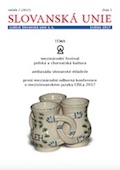
Merunka, V. Prva medžunarodna lingvistična konferencija o medžuslovjanskom jezyku CISLa 2017 in: Slovanská unie, 2017, 2(1), pages 22-23. ISSN 2464-756X (print), ISSN 2464-7578 (on-line). Available from [https://slovjani.info]. rezjume: Conference on InterSlavic Language 2017, http://cisla.slavic-union.org/ jest prvo medžunarodno zasědanje ljudij, ktori uže mnogo lět sorabotajut na Internetu. Smyslom konferencije jest strětiti jedin drugogo, bezposrědny obměn pogledov, vzajemna inspiracija, i glubočejša sorabota do dalečejšego razvitja našego občego interesa, ktorymi sut slovjanske skonstruovane zonalne jezyky, vključajuč možnost jihnogo širenja do praxi. ključne slova: CISLa 2017; medžuslovjansky jezyk; konferencija Steenbergen van, J. Pravopisanje medžuslovjanskogo języka (in English: Orthography of the Interslavic language) in: Slovanská unie, 2017, 2(1), pages 24-32. ISSN 2464-756X (print), ISSN 2464-7578 (on-line). Available from [https://slovjani.info]. rezjume: Mezislovanský jazyk se zásadně liší od ostatních jazyků, a to jak přirozených, tak i umělých, protože spočívá spíše v rozsahu možností než ve stanoveném souboru pravidel. Oficiální pravopis se zdá být mimo dosah, jelikož to odporuje samotné podstatě jazyka. Ale tam kde standardizace selhává, mohla by uspět systematizace. Nejlepším způsobem, jak zajistit potřebnou flexibilitu, je prototypový pravopis, který se skládá ze základní abecedy a přídavné sady volitelných znaků. ključne slova: medžuslovjansky; pravopisanje; ortografija; latinica; kirilica summary: The Interslavic language differs fundamentally from other languages, both natural and artificial, in that it consists of ranges of possibilies rather than a fixed set of rules. An official orthography seems out of reach, as it would go against the very nature of the language. But where standardisation fails, systematisation might succeed. The best way to ensure the necessary flexibility is a prototype orthography, consisting of a basic alphabet and an additional set of optional characters. keywords: Interslavic; orthography; Latin script; Cyrillic script |


 ISSN 2570-7108 (print) - ISSN 2570-7116 (on-line)

