

parametry poiskanja: avtor = %, nazvanje = %, rezjume = %, kljucno = %, od = 2018, do = 2018
(novo poiskanje jest na na koncu tutoj stranice)
PDF format |
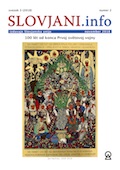
Merunka, V. Proglašenje na pamět 100 lět od osnovanja Češskoslovačskoj republiky (in English: Proclamation commemorating 100 years since the founding of the Czechoslovak Republic) in: Slovjani.info, 2018, 3(2), pages 1-4. ISSN 2570-7108 (print), ISSN 2570-7116 (on-line). Available from [https://slovjani.info]. rezjume: Proglašenje na pamět 100 lět od osnovanja Češskoslovačskoj republiky i diskusija nad vizijeju novogo strategičnogo cělja slovjanskyh narodov do budučnosti 21-ogo stolětija. ključne slova: oslava 100 lět; Češskoslovačska republika; novy strategičny cělj slovjanskyh narodov; slovjanska kulturna diplomacija summary: A proclamation commemorating 100 years since the founding of the Czechoslovak Republic and a discussion of the vision of the new strategic goal of the Slavic nations in the future of the 21st century. keywords: jubilee of 100 years; Czechoslovak republic; new strategic goal of slavic nations; slavic cultural diplomacy Ryzhova, A. Narod ljubi nas: počutja upada Carstva v vozpomněnjah svědkov 300-lětnogo jubileja doma Romanovyh (in English: The People Love Us: the Feelings of the Empire's Decline in the Contemporary Memoirs of the 300-years Anniversary of the Romanov Dynasty) in: Slovjani.info, 2018, 3(2), pages 5-12. ISSN 2570-7108 (print), ISSN 2570-7116 (on-line). Available from [https://slovjani.info]. rezjume: Poslědna i jedinstvena oslava sěmejstva Romanovyh, ktora byla dolžnoj se prazdnovati vsenarodno, ostavila gluboko vpečetljenje na sučasnikov. Svědky v svojih vozpomněnjah i dnevnikah opisyvali reakciju naroda, elity i Nikolaja Drugogo. Cělj članka jest složeno ukazati podobnosti i razliky mněnj poslě oslav v kontekstu počutij upada Carstva. ključne slova: 300-lětna ročnica doma Romanovyh; vozpomněnja; Nikolaj II; oslava; sěmejstvo Romanovyh summary: The last and only celebration of the Romanov Dynasty that had to be celebrated nationwide left the great impression on the contemporaries. Witnesses in their own memoirs and diaries described the reaction of the people, elites and Nicholas II. That paper's goal is to complexly demonstrate similarities and differences of the opinions based on the results of the celebrations in the feelings of the Empire's decline context. keywords: 300-years aniversary of the Romanovs; memoirs; Nicholas II; celebrations; the Romanov dynasty Silfer, G., Steenbergen van, J. Slovjanske vlivy v Esperanto (in English: Slavic influence to Esperanto) in: Slovjani.info, 2018, 3(2), pages 13-16. ISSN 2570-7108 (print), ISSN 2570-7116 (on-line). Available from [https://slovjani.info]. rezjume: Članok govori o avtoru jezyka Esperanto Lazaru Ludviku Zamenhofu i o vlivah slovjanskyh jezykov do jezyka Esperanto. ključne slova: Esperanto; Lazar Ludvik Zamenhof; slovjanske vlivy v Esperanto summary: The article presents the author of Esperanto Lazar Ludwig Zamenhof and the influence of Slavic languages to Esperanto. keywords: Esperanto; Lazar Ludwig Zamenhof; Slavic influence to Esperanto Igbineweka, A., Steenbergen van, J. Swahili dlja vozhodnoj i Guosa dlja zapadnoj Afriky/ECOWAS (in English: Swahili for the East and Guosa for the West Africa/ECOWAS) in: Slovjani.info, 2018, 3(2), pages 17-20. ISSN 2570-7108 (print), ISSN 2570-7116 (on-line). Available from [https://slovjani.info]. rezjume: Tekst iz prezentacije Prof. Alexandra G. Igbineweky na vtoroj konferenciji medžuslovjanskogo jezyka CISLa 2018. Na koncu teksta je memorandum o sorabotě. ključne slova: Guosa; CISLa 2018 summary: A text from the presentation of Prof. Alex G. Igbineweka at the second conference on the Interslavic language. There is a memorandum about cooperation at the end of this text. keywords: Guosa; CISLa 2018 Swat, M. Moderno glagoljičsko pravopisanje (in English: Modern Glagolitic Orthography) in: Slovjani.info, 2018, 3(2), pages 21-38. ISSN 2570-7108 (print), ISSN 2570-7116 (on-line). Available from [https://slovjani.info]. rezjume: Avtor obgovarja glåvne problemy svęzane s upotrěbjanjem glagoljice tutdenj, reprezentovanjem dneśnogo izgovora råznyh slovjanskyh językov glagoljičskym pravopisanjem i korišćenjem glagoljice na modernyh orųdjah komunikacije, za čem prědstavja rěšenje izråbotane s kolegojų. ključne slova: glagoljica; moderno glagoljičsko pravopisanje; elektronične orųdja komunikacije; fonologija; Slovjani; glagoljičska interpunkcija; slovjansky alfabet; vseslovjanska glagoljica summary: The author discusses the main problems connected with today's use of glagolitic script - the representation in glagolitic orthography of today's slavic languages pronounciation and use of glagolitsa on modern electronic communication tools. After that, the author presents a solution worked out with his colleague. keywords: glagolitsa; modern glagolitic orthography; electronic communication tools; phonology; Slavs; glagolitic punctuation; slavic alphabet; all-slavic glagolitic script Merunka, V., Swat, M. Proglas (in English: Proglas) in: Slovjani.info, 2018, 3(2), pages 39-42. ISSN 2570-7108 (print), ISSN 2570-7116 (on-line). Available from [https://slovjani.info]. rezjume: Proglas (doslovno Prědslovje) jest poema iz IX stolěťja, ktoroj avtor byl věrodostojno svęty Kirill (*826-827, +869), zajedno s bratom Metodijem svęty hrånitelji Evropy, zvani "apostoli Slovjanov", i tvorci pŕvoj slovjanskoj literatury. V Proglasu byl hvaljeny slovjansky prěklad a jednočasno byla naznačena ljudska privilegija hvaljeńja Boga v rodimom języku. Imaje takože mnoge citaty i parafrazy iz Evangelija i Svętyh Piśm. ključne slova: Proglas; Sv. Kirill; Sv. Methodij; heksameter; staroslovjansky summary: Proglas is the foreword to the Old Slavonic translation of the four Gospels. It was written by St Cyril and is considered to be the first poem in any literary Slavic. keywords: Proglas; St Cyril; St Methodius; hexameter; Old Slavonic Kuznetsov, N. V. Reforma Russkogo pravopisa 1918g - pričiny i prijem (in English: The 1918 Orthographic Reform of the Russian Language - Reasons and Reception) in: Slovjani.info, 2018, 3(2), pages 43-48. ISSN 2570-7108 (print), ISSN 2570-7116 (on-line). Available from [https://slovjani.info]. rezjume: V 1918 godu v Sovětskoj Rossiji bylo reformirovano pravopisanje russkogo jezyka. Ale ne vsi v Rossiji byli suglasny s reformoju, ktora stala ugrozoj kultury. V časy Gradžanskoj vojny protivniky bolševikov korystovali tradicijno pravopisanje, aby iměti razliku od njih. Poslě poraženja bělyh, tradicijny pravopis stal se symbolom Zagraničnoj Rossije i jejinoj kultury. Sučasno tradicijno pravopisanje tež žije. V tutom članku my govorimo o historiji russkogo pravopisanja do i poslě reformy 1918 g. Članok jest pisany v russkoj jezyku v pravopisanji do reformy 1918 g. ključne slova: pravopisanje; russky jezyk; Zagranična Rossija; reforma 1918 goda summary: In 1918 in the Soviet Russia, there was the reform of the Russian spelling. But not all people in Russia was agreed with that reform, that became a menace for the culture. During the Civil War the opponents of the Bolsheviks still used the traditional orthography to differ themselves from the Reds. After the Whites defeat, the traditional spelling became the symbol of Russian Émigré and its culture. Now the traditional orthography still lives. In this article, we are speaking about the history of the Russian orthography before and after the 1918 Reform. This article is written in Russian using orthography before 1918. keywords: orthography; the Russian language; Russian Émigré; the 1918 Reform Gasparyan, R. Alfabetne vojny slovjanov (prva čest teksta) (in English: Alphabetic Wars of Slavs (first part)) in: Slovjani.info, 2018, 3(2), pages 49-58. ISSN 2570-7108 (print), ISSN 2570-7116 (on-line). Available from [https://slovjani.info]. rezjume: Členok v kratkosti razkryvaje vse sučne slovnanske pismenosti iz točky zrěnja alfabetnyh vojn, ktore hotěli do vseslovjanskogo koriščenja utvrditi toliko jednu pismenost nad vse druge. Jest pokazano, že razděljenje slovjanskogo světa na zapad i vazhod počelo netoliko tute vojny, ale i volju jih poraziti, kogda puti rěšenja byli takože različne od svojego města. V prvoj česti kratko razkryvajemo glagoljicu. ključne slova: alfabetne vojny; glagoljica; kyrillica; latinica; alfabetne eksperimenty summary: This article is an attempt to review briefly all existing Slavic alphabets from the point of view of alphabetical wars, which are attempts to establish only one alphabet for widespread use, excluding or suppressing all others. It is shown that the separation of the Slavic world into the East and the West, however, gave start not only to the alphabetical wars, but also to attempts to overcome them, and the approach differed depending on in which part of the Slavic world these attempts were made. In first part there is brief review of Glagolitic script. keywords: alphabetic wars; Glagolitic; Cyrillic; Latin; alphabetic experiments Merunka, V. Slovjanstvo dnes i zajutra (in English: Slavism - today and tomorrow) in: Slovjani.info, 2018, 3(2), pages 59-68. ISSN 2570-7108 (print), ISSN 2570-7116 (on-line). Available from [https://slovjani.info]. rezjume: Slovjanstvo, točněje slovjanska vzajemnost, naleželo do glavnyh motivačnyh faktorov narodnogo razbudženja v 19-om věku i polnoj emancipacije netoliko češskogo naroda, ale i bojšej česti slovanskyh narodov Evropy, ktore podobno kako Čehi v tutom vrěmeni ne iměli svoje samostoje državy. Ale Prva i vtora světova vojna dramatično proměnila slovjansky svět. Bylo osnovano mnogo novyh držav i byly takože komunistične i fašistične režimy. Nyně, na početku 21-ogo stolětja jesmo v specijalnoj situaciji, ktora jest posiljena iz jednoj česti razpadom Sovětskogo soveza i jegovogo komunističnogo bloka, i iz vtoroj česti od nastupajučej globalizacije. Tuto vse dramatično proměnilo pogled na slovjanstvo i na potrěbnost slovjanskoj vzajemnosti. Iz jednogo města slyšimo radikalne zaključenja, že slovjanska vzajemnost svoji historičnu rolju davno napolnila i ne bude potrěbna, ale iz drugogo města slyšimo druge podobno nekompromisne mněnja, že Slovjani iznovo trpet od masivnogo planovanogo porabovanja. V tutom tekstu starajemo se naidti odgovor, i takože budemo objasniti dolgovrěmeno ostavajuče različnosti v porazumjenju slovjanskoj vzajemnosti od russkyh i ne-russkyh slovjanov, i budemo načrtati potrěbnost novogo strategičnogo cělja do budučnosti slovjanskyh narodov. ključne slova: Slovjani; slovjansky svět; slovjanska vzajemnost; russki i ne-russki slovjani; slovjanska budučnost; slovjansky strategičny cělj summary: Slavs, more precisely Slavic reciprocity, was one of the leading motivational factors of national revival in the 19th century and the overall emancipation not only of the Czech nation but also of most of the Slavic peoples in Europe, which, like the Czechs at that time, did not have their independent states. By the First and Second World Wars, the Slavic world changed dramatically. Many new states have emerged, and communist and fascist totalitarian regimes have also emerged. Now, at the beginning of the 21st century, we are in an extraordinary situation, on the one hand, boosted by the fall of the Soviet Union and its Communist block and, on the other hand, the rise of globalisation. All this dramatically changed the view of Slavicity and the need for Slavic reciprocity. On one side, there are radical conclusions that Slavic reciprocity has already fulfilled its historical role, and we will not need Slavs in the future, but on the other hand, there are yet another strong views that the Slavs are once again facing large-scale planned enslavement. In this article, we will try to find an answer and also explain the long-standing differences in the understanding of Slavic reciprocity by Russian and non-Russian Slavs, and point out the need for a new strategic goal for the future of Slavic nations. keywords: Slavs; Slavic world; Slavic reciprocity; Russian and non-Russian Slavs; Slavic future; Slavic strategic goal Chorabik, Z. Odnošenja medžu Sejmom i "Kazackoju Sprawoju" v vrěmeni vlady Władysława IV. (in English: Relations between the "Sejm" and the "Cossack Case" during the reign of Władysław IV) in: Slovjani.info, 2018, 3(2), pages 69-75. ISSN 2570-7108 (print), ISSN 2570-7116 (on-line). Available from [https://slovjani.info]. rezjume: Članok piše o odnošenjah medžu Poljskym Sejmom i "Kazackoju Sprawoju" v vrěmeni vlady kralja Władysława IV. Tekst leži na poljskyh pravnyh pramenah "Volumina Legum". Sobytja popisane v tutom članku sut interesny materijal do diskuzije o pozdnějših poljsko-ukrajinskyh odnošenjah. Popisane sobytja iměli vplyv do naslědnogo kvaliteta svědomosti obojih narodov. Popisane problemy razvijali se, i zato ne jest možno skazati, že od vlady kralja Władysława IV. byli odvračene. ključne slova: kazaki; Poljsko-Litevska Unija; Władysław IV.; poljsko-ukrajinske vezy summary: This article concerns on the relations between the Polish "Sejm" and the Cossacks during the reign of King Władysław IV. The author is based on the Polish legal source of "Volumina Legum". The problems described in the article are an interesting material for discussing later Polish-Ukrainian relations. The events described have a significant impact on the subsequent quality of the consciousness of both nations. The problems outlined in the article have been evolving and it can not be said that the Polish-Cossack conflict was averted during the reign of King Władysław IV. keywords: Cossacks; Polish-Lithuanian Commonwealth; Władysław IV; Polish-Ukrainian relations Masár, R. Informacija o novoj knigě "Panslav" (in English: Information about a new book "Panslav") in: Slovjani.info, 2018, 3(2), pages 76-78. ISSN 2570-7108 (print), ISSN 2570-7116 (on-line). Available from [https://slovjani.info]. rezjume: Članok popisuje novu knigu poeta Radovana Masára i jegovu motivaciju do pisanja tutoj knigy. ključne slova: slovjanska poezija; Radovan Masár summary: Information about a new book "Panslav" of a poet Radovan Masár and his motivation to write this kind of book. keywords: Slavic poetry; Radovan Masár Hachran, J. Obrazok iz pokryvnoj stranice časopisa (in English: Picture from the journal cover) in: Slovjani.info, 2018, 3(2), pages 79-80. ISSN 2570-7108 (print), ISSN 2570-7116 (on-line). Available from [https://slovjani.info]. rezjume: Članok popisuje obrazok, ktory jesm stvoril do oslavnyh dnov na pamět 100 lět od obnovjenja samostojnoj Poljsky i osnovanja Češskoslovakije i Kraljevstva Srbov, Hrvatov i Slovencev, kako i oglašuje medžuslovjansky tekst v jegovoj vrhnoj i dolnoj česti. Jubileum Slovjanov jest izobraženo v alegoriji na pticu Fenix, ktora jest vozrodžena do novogo života. Na početok trěba znamenati, že obrazok jest v realnosti grafika stvorjena specijalnoju technikoju, ktora jest osnovana na dvoj-fazovom odtisku, kogda prvo jest na papir odtiskano vse kolorovano, i potom jest do kolorovanogo obraza pritiskana zlata folija, čto čini konečnoj tvorbě podobnost do pravoslavnoj ikony. Zlato jest moj ljubimy materijal, s ktorym često rabotaju, bo moje obrazy imajut glavno duhovnu i mističnu tematiku, i zlato jest prěkrasny materijal, zatože davaje věčjam istu svetost, ktora takože prinaleži do tutogo jubileja. ključne slova: Jan Hachran; dvoj-fazovy odtisk; grafika; ikonografija summary: The article describes the picture, which I created to celebrate the 100th anniversary of the restoration of free Poland, the founding of Czechoslovakia, and the creation of the Kingdom of Serbs, Croats and Slovenes, which is also written in the upper and lower part of that picture. This anniversary is expressed through allegory of the Phoenix bird which is born from the ashes to a new life. On the be-ginning I add, that the image is in fact a graphics created by a special technique, which is based on two-phase printing, at first all the colors are printed and then follows the printing with a gold foil, so actually the whole artwork looks like an orthodox icon. Gold is my favorite material, with which I often work, because my paintings are mostly spiritual and mystical and gold is a magnificent piece of material, because it adds things some sanctity, that certainly also belongs to this anniversary. keywords: Jan Hachran; two-phase printing; graphics; iconography |
PDF format |
Merunka, V. Program konferencije CISLa 2018 (in English: CISLa 2018 - conference programme) in: Slovjani.info, 2018, 3(1), pages 1-5. ISSN 2570-7108 (print), ISSN 2570-7116 (on-line). Available from [https://slovjani.info]. rezjume: CISLa 2018 (Conference on InterSlavic Language 2018) jest vtoro medžunarodno zasědanje ljudij, ktori uže mnogo lět sorabotajut na Internetu. Prvo zasědanje byla mnogo uspěšna konferencija CISLa 2017. Konferencija CISLa 2018 jest neoddělimoju častju medžunarodnogo festivala Dni slovjanskoj kultury, v godině 2018 posvečenoj srbskoj i lužičskoj kulturam. ključne slova: CISLa 2018 summary: CISLa 2018 (Conference on InterSlavic Language 2018) is the second international meeting of people who have been collaborating on the Internet for many years. The first session was a very successful CISLa conference 2017. CISLa 2018 is an integral part of the International Festival of the Days of Slavic Culture, in 2018 devoted to the Serbian and Lusatian cultures. keywords: CISLa 2018 Redakcija Na východ Časopis Na vzhod (Navýchod) - črěz poznanje do porazuměnja (in English: Journal Navýchod (to the East) - through knowledge to understanding) in: Slovjani.info, 2018, 3(1), page 6. ISSN 2570-7108 (print), ISSN 2570-7116 (on-line). Available from [https://slovjani.info]. rezjume: Vzhodnoevropsky klub jest družstvo studentov Filosofičskogo fakulteta Univerziteta Karlova i drugyh ljudij interesujučih se do oblasti vzhodnoj Evropy. Jegov cilj jest tvoriti prostor za studijum vzhodnoj Evropy i otvorjeny obměn nazrěnj medžu ljudimi različnogo mněnja, cennostij i perspektiv. ključne slova: časopis Navýchod (Na vzhod) summary: East European Club is an association of students of the Faculty of Philosophy of the Charles University and other people involved in the area of Eastern Europe. Its primary objective is to create space for the study of Eastern Europe and open exchange of views among the people of diverse minds, values and perspectives. keywords: journal Navýchod (to the East) Negrišorac, I. Vuk kako naš sovrěmenik: vplyv Vuka Stefanovića Karadžića i Matice srbskoj na subjekty historije srbskoj kultury (in English: Vuk as our contemporary person: Vuk Stefanović Karadžić and Matica srpska on subjects of history of Serbian culture) in: Slovjani.info, 2018, 3(1), pages 7-17. ISSN 2570-7108 (print), ISSN 2570-7116 (on-line). Available from [https://slovjani.info]. rezjume: Članok prědstavuje osobnost Vuka Stefanovića Karadžića i jegov vplyv na osnovanje najstaršego dodnes rabotajučego slovjanskogo naučno-kulturnogo družstva Matica srbska. Takože se govori o jegovoj reformě srbskogo pravopisa i počatkah modernogo srbskogo jezyka i kniževnosti. ključne slova: Vuk Stefanović Karadžić; Matica srbska; srbska kultura i historija summary: The article presents Vuk Stefanović Karadžić's personality and his influence to the foundation of the eldest still-working Slavic scientific and cultural institution Matica srpska. The article also speaks about his reform of the Serbian orthography and the origin of modern Serbian language and literature. keywords: Vuk Stefanović Karadžić; Matica srbska; serbian culture and history Weissová, N. Sveta Ljudmila 1100 lět: tradicija - narodne korenje - rodina - věra (in English: Saint Ludmila 1100 years: tradition - national roots - family - faith) in: Slovjani.info, 2018, 3(1), pages 18-19. ISSN 2570-7108 (print), ISSN 2570-7116 (on-line). Available from [https://slovjani.info]. rezjume: Projekt Sveta Ljudmila započel se lěta 2016 i jest zaščičen rovnoimennym družstvom. Jego cilj jest prazdnovanje 1100. godiščiny mučenickoj smrti svetoj Ljudmily, ktora bude lětom 2021. Cilj družstva jest slavjenje tutoj godiščiny. Dalje pomočju kulturnyh dějanj, izstavk, tvorjenjem audiovizualnyh ili drugyh umětničsky artefaktov, i takože ohranjenjem krajiny i pamětnikov. Smyslom projekta jest podkrěpiti narodny identitet sučasnoj občiny i tvoriti vyše cěnjene kulturnu i životnu okolinu za sučasnu generaciju. Veče informacij o projektu jest na webovyh stranicah www.svataludmila.cz ili na Fejsbuku (www.facebook.com/svataludmila1100let). ključne slova: sveta Ljudmila Češska; godiščiny; narodni patroni summary: The Svatá Ludmila 1100-year project originated in 2016 and is sheltered by the association of the same name. Its goal is to celebrate the 1100th anniversary of Saint Ludmila's martyr's death in 2021. The aim of the association is therefore to honor the mentioned anniversary. Then, through cultural events, exhibitions, audiovisual or other art artefacts, as well as landscape and monument care. The project aims to strengthen respect for this important woman, to support the national identity of contemporary society and to create a more valuable cultural and environmental environment for present generation. More information about the project can be found at www.svataludmila.cz or on Facebook (www.facebook.com/svataludmila1100let). keywords: Saint Ludmila of Bohemia; anniversaries; national patrons Igbineweka, A. Swahili za vzhodnu Afriku - Guosa za zapadnu Afriku, ECOWAS (in English: Swahili for the East Africa - Guosa for the West Africa, ECOWAS) in: Slovjani.info, 2018, 3(1), pages 20-21. ISSN 2570-7108 (print), ISSN 2570-7116 (on-line). Available from [https://slovjani.info]. rezjume: Tutoj članok govori o potrěbnosti razvitogo domorodnogo regijonalnogo zonalnogo jezyka Guosa za Nigeriju i Ekonomičnu občinu zapadnoafričskyh držav (ECOWAS) kako lěpšu alternativu od sejčasnyh kolonijalnyh jezykov. Jest dobro znajemo, že bolšina ljudij mysli v svojem materskom jezyku, i kogda oni govoret v drugyh jezykah bez identičnyh parametrov s jihnym etničskym povodom, potom se vyše zajmajut pravopisom i bezkonečnymi težkostjami jezyka vměsto sosrědotočenja do glavnogo smysla besědy. ključne slova: jezyk Guosa; zapadna Afrika; ECOWAS summary: This paper discusses the need for an evolved indigenous regional zonal constructed language Guosa for Nigeria and the Economic Communities of the West African States (ECOWAS) as the better alternative to currently used colonial languages. It is a well-known fact that most people think in their mother tongue, and that when they speak in other languages of no identical parameters to their ethnicity they are engaged in transliteration and endless hurdles before the main issues at hand. keywords: Guosa language; West Africa; ECOWAS Bondarenko, N. Razvitje interesa do srbskoj kultury v Rossiji (in English: Development of interest in Serbian culture in Russia) in: Slovjani.info, 2018, 3(1), pages 22-24. ISSN 2570-7108 (print), ISSN 2570-7116 (on-line). Available from [https://slovjani.info]. rezjume: Članok prezentuje historiju vezov medžu Rossijeju i Srbijeju, i potom avtor govori o svojem projektu Srbija v srdcu mojem. ključne slova: kulturne vezy; Srbija; Rossija; projekt Srbija v srdcu mojem summary: The article presents the history of cultural relations between Russia and Serbia and then the author talks about her own project of Srbija in my heart. keywords: cultural relations; Serbia; Russia; the project of Serbia in my heart Krajčík, L., Pavlík, M. Slovjanska ambasada mladeži (in English: Slavic Youth Embassy) in: Slovjani.info, 2018, 3(1), pages 25-35. ISSN 2570-7108 (print), ISSN 2570-7116 (on-line). Available from [https://slovjani.info]. rezjume: Tutoj projekt hoče dosegnuti sorabotu medžu slovjanskymi narodami. Pričin smysla takogo projekta jest v podobnyh tradicijah, kulturě i glavno v jezyku. Ciljova grupa tutogo projekta sut mladi ljudi, primarno studenti iz srědnyh škol i univer-zitetov neodvisno od jihnoj krajiny povoda ili nacionalnosti. Glavne punkty tutogo projekta i prědloženja sut protokol, diplomacija, kako postupati v občině i različnyh typah životnyh situacij. Jesmo prědlagali podobny projekt v Moskvě, Beogradu, Katowicah, Pragě i Berlinu. ključne slova: diplomacija; kako se postupati v občině; protokol; slovjanska sorabota; slovjanska ambasada mladeži summary: With this project we want to achieve diplomatic cooperation between Slavic countries. The reason why we have chosen Slavic countries is that we have been raised in similar traditions, culture and mainly languages. Target group of this project are young people, primarily students from high schools and universities disregard their country of origin and nationality. The main points of this project and proposal are protocol, diplomacy, how to correctly behave in society and various types of life situations. We have already proposed similar project in Moscow, Belgrade, Katowice, Prague and Berlin. keywords: diplomacy; how to behave in society; protocol; Slavic cooperation; Slavic Youth Embassy Kocór, M. Gotovnost škol i učiteljev do realizacije medžuslovjanskogo jezyka i prve rezultaty badanja (in English: Readiness of schools and teachers to implement the Interslavic language initiative and preliminary research results) in: Slovjani.info, 2018, 3(1), pages 36-39. ISSN 2570-7108 (print), ISSN 2570-7116 (on-line). Available from [https://slovjani.info]. rezjume: Članok davaje informaciju o rastučem podporu medžuslovjanskogo jezyka i os-novnoj potrěbnosti jego promocije i implementacije do škol v različnyh slovjan-skyh krajinah. Počatečno razslědovanje i govotnost učiteljev priključiti předložen-je učenja medžuslovjanskogo jezyka je diskutovano iz slovjanskoj, pedagogičnoj, sociologičnoj i drugyh naučnyh pozicij. Možnost obměny razslědovajučih iniciativ v tutoj oblasti bude besědovana na vtoroj medžunarodnoj CISLa 2018 konferenciji i festivalu Dni slovjanskoj kultury od 31 maja do 3 juna 2018 v Čehiji. ključne slova: medžuslovjansky jezyk; škola; učitelj; gotovnost vvedenja medžuslovjanskogo jezyka summary: The article presents information about the increasingly growing and gaining soci-al support of the Interslavic language and the substantive need to promote and implement it in schools in various Slavic countries. The initiated research on the readiness of teachers to include Interslavic's educational offer in schools is worth discussing Slavic, pedagogical, sociological and other scientific environments. An opportunity to exchange research initiatives in this area will be the 2nd CISLa 2018 conference and the Days of Slavic culture from 31 May to 3 June 2018 in the Czech Republic. keywords: Interslavic language; school; teacher; readiness to implement Interslavic language Heršak, E. Jezyk, kultura i historija (in English: Language, culture and globalization) in: Slovjani.info, 2018, 3(1), pages 40-51. ISSN 2570-7108 (print), ISSN 2570-7116 (on-line). Available from [https://slovjani.info]. rezjume: Članok govori o odnosah medžu jezykom i kulturoju, o vplyvu jezyka na razvoj kul-tury, pitanje o počatkah jezyka v dalekoj historiji, prěgled pojma "globalizacija" i razširjenje jezyčnyh vezov. Članok govori o hipoteze, že jezyk je činitelj do razvoja ljudkoj kultury. Kromě togo piše o ideji, že velika erupcija vulkana Toba na Su-matrě okolo 75.000 pr.Kr. donesla krizu, ktora napokon činila razvoj jezyka našego biologičnogo vida Homo Sapiens i jegovoj vyše kompleksnoj kultury. I pravděpodobno imaginacija i ne toliko logika byla ključnoju do togo razvoja. Članok takože prěgledaje tendenciju vezanja ljudskyh občin v světu, ktora dnes dostala nazvanje "globalizacija" s slědujučim popisanjem "medžunarodnoj komunikacije", prvo s vezom na termin "lingua franca" ("jezyk biznesa"). Na koncu članka jest vizija potrěbnosti respektovanja različnostij v světu, ktore sut povezane i s jezyčnymi dimenzijami. ključne slova: jezyk; kultura; ljudska evolucija; globalizacija; světska komunikacija summary: The paper discusses the relationship between language and culture, the influence of language on cultural development, the question of emergence of language structure in the distant past, the concept of globalization and the extension of linguistic links. An idea is presented about the mass eruption of the volcano Toba on the island of Sumatra about 75,000 BC, since it may have brought about a crisis that finally had an influence on the develop of language and complex cultures in our species. Imagination probably, not only logic, was important in this development. Later in the article a description is given in regard to the tendency on combining human societies in the world, namely "globalisation", and then a summary follows in regard to "international communication", first with a comment on lingua franca (a "business language"). At the end of the article an opinion is mentioned, i.e. that respecting differences in the world is necessary, and that this is also connected to linguistic dimensions. keywords: language; culture; human evolution; globalization; global communication Steenbergen van, J. Umětne jezyky i ISO 639-3 (in English: Constructed languages and ISO 639-3) in: Slovjani.info, 2018, 3(1), pages 52-68. ISSN 2570-7108 (print), ISSN 2570-7116 (on-line). Available from [https://slovjani.info]. rezjume: SIL International upravjaje medžunarodnym standardom ISO 639-3, v ktorom vsaky ljudsky jezyk imaje tribukvovy kod. Na spisu takože jest město dlja umětnyh jezykov, ale do časa postupanje s njimi bylo nedoslědno i te jezyky, ktore dnes sut na spisu, byli izbrane dost slučajno. Največši problem jest odsučstvo jasnyh, praktičnyh kriterijev, ktore sut prigodne dlja svojstv toj kategorije jezykov. Zato avtor prědlagaje četyri konkretne, měrime kriterije vključenja. V vtoroj česti članka avtor takože obgovarjaje možnosti priznanja koda medžuslovjanskomu jezyku. ključne slova: ISO 639-3; SIL; umětne jezyky; medžuslovjansky summary: Although SIL explicitly states the intention to assign ISO 639-3 codes to constructed languages as well, the criteria it applies for inclusion are very unclear, and mostly pertaining to natural languages. The 21 constructed languages that currently have a code appear to have been selected rather haphazardly, and half of them do not even fulfil the criteria. Besides, there is little consistency in the arguments used for turning down change requests. Constructed languages have characteristics that require a specific approach, which until now SIL has been unable to provide. To cope with this problem, the author proposes four measurable criteria: completeness, literature, community and notability. Two additional factors, uniqueness and permanence, cannot really be used as criteria, but are still worth being taken into account. The second part of the article deals with Interslavic. Although Interslavic appears to fulfil both the criteria applied by SIL and the criteria proposed by the author, a request for a code has been turned down twice. The arguments used by the Registration Authority (that Interslavic is not one single language, that it does not have a well-developed or long history, that it is not sufficiently standardised, and that there is no substantial literature or user community) are refuted one by one. keywords: ISO 639-3; SIL; constructed languages; Interslavic Merunka, V. Koriščenje medžuslovjanskogo jezyka v filmu Kolorovana ptica (in English: Use of Interslavic in film Painted Bird) in: Slovjani.info, 2018, 3(1), pages 69-75. ISSN 2570-7108 (print), ISSN 2570-7116 (on-line). Available from [https://slovjani.info]. rezjume: Članok piše o koriščenji medžuslovanskogo jezyka v gotovjenom filmu Kolorovana ptica češskogo režisera Václava Marhoula po vzoru znajemoj rovnoimennoj knigy poljsko-američskogo pisatelja Jerzy Kosińskiego. Do filma bylo trěba sotvoriti fiktivne narod i krajinu reprezentujuče srědnu i vzhodnu Evropu, kdě v lětach 1939 - 1945 byla okupacija od fašističskoj Němcije i potom front Črvenoj Armije SSSR, zatože originalna povědka v knige naměreno ne jest točna avtorova avtobiografija, ale jest bližše do sintezy mnogyh različnyh ale sobě podobnyh životnyh izkušenostij, ktore se věrojatno dogodivali v vsih krajinah srědnoj i vzhodnoj Evropy togo vrěmene. ključne slova: medžuslovjansky jezyk; film; Kolorovana ptica; Jerzy Kosiński; Václav Marhoul summary: The article describes the use of Interslavic in the upcoming film Painted Bird by Czech producer Vaclav Marhoul according to the same-name book by Polish-American writer Jerzy Kosinski. For this movie, it was necessary to create fictitious country and nation generally representing Central and Eastern Europe where, in 1939-1945, was the Nazi occupation and the front of the Red Army of the USSR. It is because the original story in the book is not an exact author's autobiography, but rather a synthesis of more similar life stories, which undoubtedly many times in different variants took place throughout Europe at that time. keywords: Interslavic; movie; Painted Bird; Jerzy Kosiński; Václav Marhoul Novokmet, R. Četvrto slovjansko proglašenje (in English: Fourth Slavic memorandum) in: Slovjani.info, 2018, 3(1), pages 76-81. ISSN 2570-7108 (print), ISSN 2570-7116 (on-line). Available from [https://slovjani.info]. rezjume: Četvrto proglašenje Slovjanskoj unie International za status Lužičskyh Srbov ne kako nacijonalna menšina ale kako samostojny narod. ključne slova: Slavic union International; Lužičski Srbi; nacijonalna menšina; samostojny narod summary: Fourth memorandum of the Slavic union International about the status of Lusatian Serbs in Germany not as a national minority but as an independent nation. keywords: Slavic union International; Lusatian Serbs; national minority; independent nation Masár, R. Medžuslovjanska poezija (in English: Interslavic poetry) in: Slovjani.info, 2018, 3(1), pages 82-83. ISSN 2570-7108 (print), ISSN 2570-7116 (on-line). Available from [https://slovjani.info]. rezjume: Poet i tvorca prvoj češskoslovackoj filmovoj poezie Radovan Masár Vam prědstavuje odlomok iz gotovovanoj knigy s rabočim nazvanjem Panslav. Sbornik poezije v slovjanskom duhu bude sodržati poeziju v četyryh jezykah i bude obogačena ilustracijami v tradičnom obrazcu v netradičnoj formě. Objedinuje se v njej hudožstvo mnogyh slovjanskyh avtorov, i sojedinuje, kako napovědaje poema, bolše slovjanskyh narodov. ključne slova: Radovan Masár; Slovjanska poezija; filmova poezija summary: Poet and inventor of the first Czechoslovak film poetry Radovan Masár presents you a snippet of the forthcoming book with the working name Panslav. The poetry collection in the Slavic spirit will contain poems in four languages and will be enriched to illustrate the traditional pattern in an no-traditional form. It combines the art of a number of Slavic artists and joins, as the poem suggests, several Slavic nations. keywords: Radovan Masár; Slavic poetry; film poetry Merunka, V., Spáčil, D. Medžuslovjansky Hajku kalendar (in English: Interslavic Haiku calendar) in: Slovjani.info, 2018, 3(1), page 84. ISSN 2570-7108 (print), ISSN 2570-7116 (on-line). Available from [https://slovjani.info]. rezjume: Poezija pisana medžuslovjansky. ključne slova: poezija; medžuslovjansky jezyk summary: Poetry written in Interslavic. keywords: poetry; Interslavic language |


 ISSN 2570-7108 (print) - ISSN 2570-7116 (on-line)

